
Why Handmade Indian Tents Are Perfect for UK Garden Weddings
Anyone who's planned an outdoor wedding knows exactly how things work. You check the forecast obsessively, you've got a backup plan for the backup plan, and you spend the whole morning praying the drizzle holds off just long enough for the speeches. British weather isn't really predictable, which is exactly why the shelter you choose ends up mattering almost as much as the venue itself.
A plain white marquee has always been the safe choice. It's also a bit sterile. More couples are cottoning on to that and choosing to source a handmade Indian tent for wedding garden UK settings instead. It's not just about keeping guests dry. It's about turning an ordinary lawn into something that actually feels like yours, rather than a hired structure that looked exactly the same at someone else's wedding last month.
Quick summary
- Handmade Indian tents (sometimes called 'shamiana-style' tents) bring a level of craftsmanship no standard marquee has
- They cope with UK weather just fine, as long as the fabric and structure have been properly treated
- Plenty of "Indian style" tents on the market aren't actually handmade — once you know what to look for, it's obvious
- They suit boho-leaning weddings, but also work beautifully for classic English garden styling
Why It Feels Like Craft, Not Just Decor
A marquee goes up, gets dressed with flowers and fairy lights, and comes down again a day later. It's a blank canvas you have to work quite hard to make feel personal.
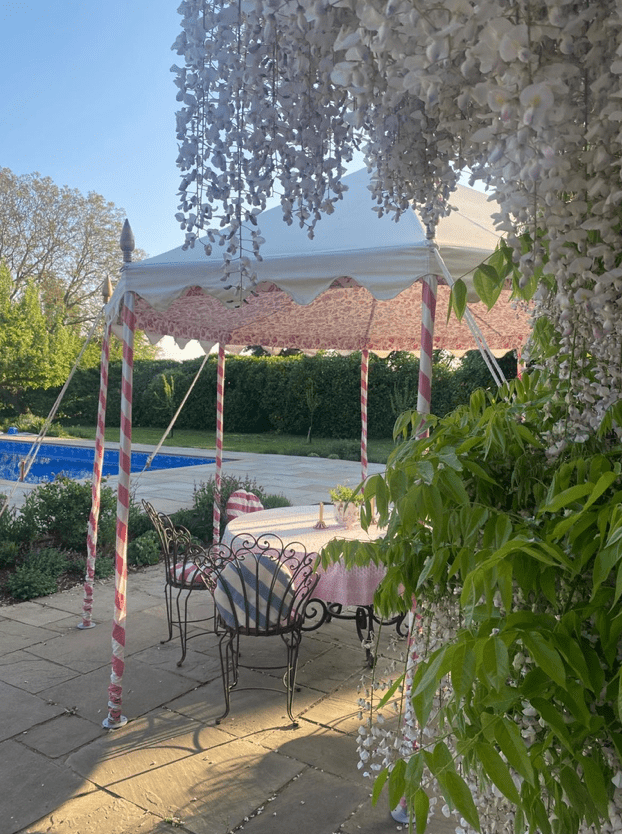
A handmade tent starts from a different place entirely. The embroidery, the block-printed panels, the carved wooden poles — none of that gets added on afterwards. It's part of the structure from the moment it's made, which is why it doesn't need much dressing up to already look finished.
Titania Living started from that same instinct. Two friends who liked well-made tents and the idea of eating outdoors properly, long before there was any business plan behind it. That's still roughly the bar every tent gets held to now — something that adds to a UK garden wedding, not just something that keeps the rain off.
The Craftsmanship Gap Nobody Really Talks About
Here's a thing worth knowing before you book anything: not every tent sold as "Indian style" is genuinely handmade. It's an easy detail to miss until you've actually stood next to one.
A properly handcrafted tent usually has:
|
Feature |
What to look for |
|
Fabric panels |
Hand embroidered or hand block-printed, often taking days per panel |
|
Poles |
Solid wood or bamboo, sometimes hand-carved |
|
Lining |
Natural cotton or silk, which catches light very differently to synthetic fabric |
|
Trims & tassels |
Hand-finished, not machine-stitched on |
The imitations swap most of that out for printed polyester and standard aluminium framing. In a photo taken from across the garden, you might not clock the difference straight away. Stand next to it, though, or look at the wedding photos a few years later, and it's not subtle at all.
Will It Actually Survive a British Summer?
Fair question. There's an assumption that anything this ornate and fabric-heavy can't hold up outdoors here — it's just not really true. It's usually said by people who haven't seen a well-made one set up properly.
These tents were built for outdoor use in unpredictable weather long before UK weddings were ever part of the picture. Weather resistance isn't some modern add-on bolted onto a decorative product. It's baked in.
Before you book with anyone, ask about these four things:
-
Fabric weight and treatment. Heavier, treated canvas or cotton handles anything more than a light shower far better than decorative lightweight fabric.
-
Pole strength and anchoring. Especially worth checking on exposed lawns or anywhere sloped.
-
Adjustable side walls. This is usually what separates a tent that copes with a sudden gust from one that doesn't.
- Setup timeline. Handmade tents generally need a slightly longer install window than a standard marquee – it's worth building into your planning early rather than assuming it's a same-day job a marquee often is.
Why the Atmosphere Change
Go to enough weddings, and marquees start to blur together after a while. It's the same white canvas, the same string lights, and the same slightly generic feel no matter how nice the flowers are.
A handmade tent shifts that almost immediately, and it's not just about how it looks. Natural fabric holds evening light differently to plain marquee lining – there's a warmth to it. It's a big part of why golden hour photos under one of these tents tend to have a richness that's hard to fake with lighting alone.
Guests pick up on it too, even if most of them couldn't tell you exactly why the room feels different from the last few weddings they've been to.
Boho Weddings and Many More
There's a common assumption that Indian tents only really work for maximalist, colour-heavy, bohemian styling.
In practice it tends to go the other way. A cream or ivory tent, subtly embroidered, with natural wood detailing, sits comfortably in the following:
- A classic English country garden, next to rustic wooden tables and soft floral arrangements
- A vibrant, jewel-toned celebration built around colour and pattern
- A pared-back, modern outdoor setup that just wants texture without much clutter
Good craftsmanship generally doesn't fight with whatever theme you put around it. It just adapts.
Questions Worth Asking Before You Book
Any supplier who genuinely works with handmade tents should be able to answer these without hesitating:
- Is this hand-embroidered or block-printed or machine?
- What is the weight of the fabric, and is it weather-treated?
- How many people will it comfortably hold, taking into account tables, dancing space and walkways?
- What happens should there be continuous or heavy rain on the day?
- Do you get set up, and about how much time ahead of time?
If the answers feel vague, that's usually a sign the "handmade" label is doing more marketing than describing.
The Real Reason This Choice Sticks With Guests
A wedding venue only exists for a day. What sticks around afterwards is how it felt to actually be there.
A space built with real craft tends to leave a different impression than one built purely for turnover and quick hire. That's really the quiet case for choosing a handmade Indian tent for a wedding garden in the UK over a standard marquee. It's less about wanting to be different for the sake of it and more about the setting matching the effort you've already given your entire day.
Why Choose Titania
If you're planning a garden wedding and want something that feels considered rather than hired out of a catalogue, Titania Living works on a bespoke basis — tailoring materials, colours and design to your venue and guest count rather than offering one fixed option. Every tent is handmade using traditional techniques, which really just means it was built to be part of your day, not background noise behind it.