

Article: Handmade Garden Parasols UK: Where to Buy Online and What to Look For
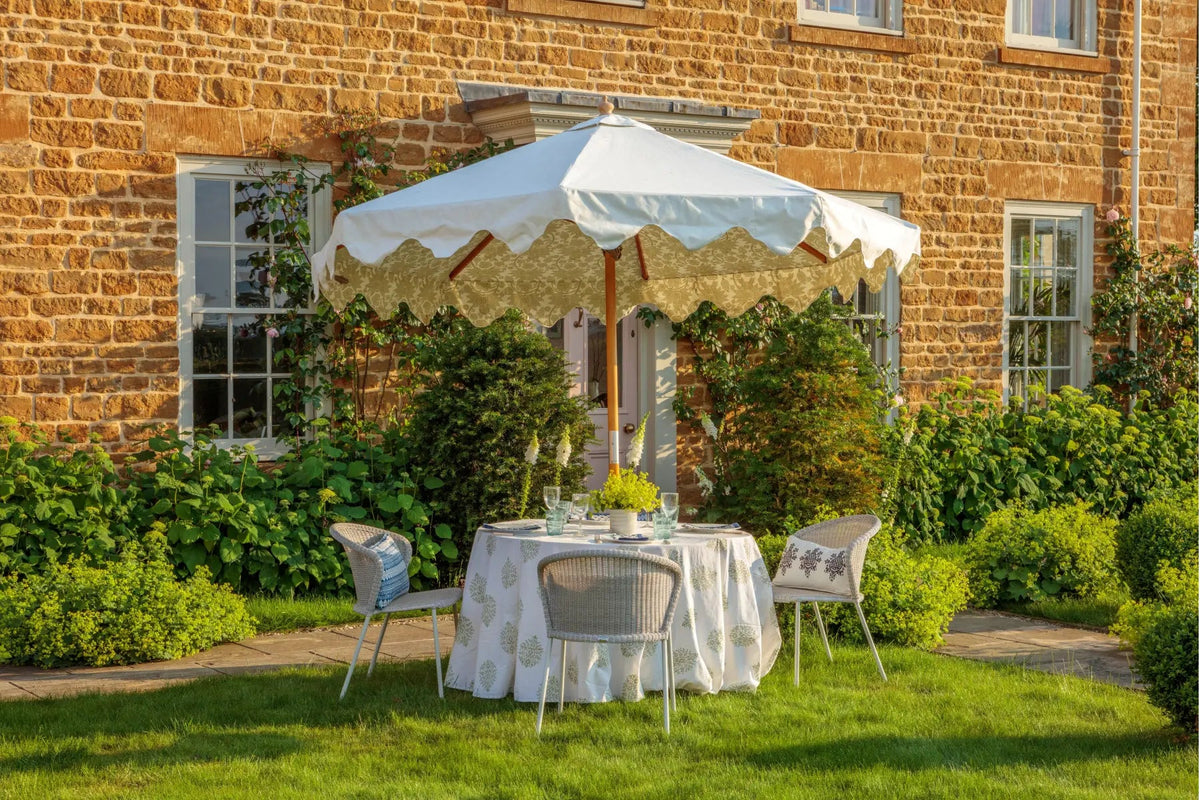
Handmade Garden Parasols UK: Where to Buy Online and What to Look For
 Spend five minutes browsing large retail websites and you will quickly notice a pattern. Most garden parasols look almost identical, with the same aluminium or wooden frames and neutral polyester fabrics appearing again and again. A handmade parasol gets asked about constantly, and that's really the whole difference between the two. A standard parasol is mainly there to provide shade, but a handmade parasol adds another layer to the garden. It becomes something you notice and enjoy even when you are not using it.
Why Handmade Changes the Whole Object
A mass-produced parasol starts with a pattern printed by machine onto synthetic fabric, cut to a template, and assembled on a production line. A handmade one starts with a carved wooden block, dipped in dye and pressed onto natural cotton by hand, one section of fabric at a time. The person doing the printing controls the pressure, the alignment, and the amount of dye picked up on each press, which means every canopy carries small variations that a machine simply can't produce. Look closely at a hand-block-printed parasol and you'll notice the pattern isn't perfectly uniform. These small differences are part of what makes hand-block printing interesting. The pattern has character because it carries the marks of the person who created it.
The frame matters too. Many handmade parasols in the UK are built with turned wooden poles rather than powder-coated aluminium, giving them a warmth and weight that plastic and metal versions don't have. The wooden frame also changes the feel of the parasol. It has more weight and presence compared with lightweight aluminium versions.
What to Actually Look For When Buying
A few things separate a handmade parasol from one that just uses the word in its product description.
The fabric. Natural cotton takes hand-block printing far better than synthetic canvas, and it ages more gracefully too, softening slightly over the seasons rather than going stiff or shiny. If a listing doesn't mention the fabric composition, ask before you buy.
The printing method is named specifically. Block printing, screen printing by hand, and hand embroidery are specific techniques, not marketing adjectives. If a brand can only describe their process as "artisan-made" without naming the actual technique, ask why before you buy.
Where it's made and by whom. Reputable makers are usually happy to talk about their artisans and workshops directly. Titania Living, for example, works with skilled block printers and tailors in India to produce each parasol, and the story behind that craftsmanship is something they're upfront about rather than vague.
Frame construction. Check whether the pole and ribs are solid timber or a cheaper composite dressed up to look like wood. Solid timber weighs more, but it holds up far better against wind and years of outdoor use.
Choosing a Pattern and Colour for a British Garden
British gardens tend to work best with parasols that lean into pattern rather than shy away from it, mostly because the surrounding greenery and grey skies give a bold print somewhere to actually stand out. A piece like the Kiki Booti Spring Green umbrella sits comfortably against lawn and hedging without disappearing into the background the way a plain cream canopy often does.
If your outdoor space leans more traditional, a design like Le Jardin Sweet Pea brings a softer, more floral character that suits a cottage garden or a patio surrounded by climbing roses. For a bolder, more saturated look, something like this pomegranate raspberry works well against neutral outdoor furniture, giving the whole seating area a single strong focal point rather than competing with a dozen smaller accessories.
Sizing and Setup
Most handmade parasols come in a similar range to standard market umbrellas, generally suited to shading a table for four to six people, though always check the canopy diameter against your actual table size before ordering. A parasol that's too small ends up looking like an afterthought, while one sized correctly becomes the centrepiece of the whole seating area.
Setup is usually straightforward with a weighted base or a parasol stand rated for the pole's weight, which will be heavier than a standard aluminium pole given the timber construction. Budget for a proper base rather than reusing a lightweight one designed for a cheaper umbrella, since an underweighted base is the most common reason parasols topple in wind.
Looking After a Handmade Parasol
Natural cotton and timber need slightly more care than plastic and synthetic canvas, but nothing demanding. Bring the parasol down or cover it during prolonged wet weather, since sitting permanently damp is harder on natural fibres than an occasional shower. A soft brush and mild soap will lift dust and light dirt from the canopy without disturbing the hand-printed dye, and letting it dry fully in the shade rather than direct sun helps the colours hold their depth for longer. With a little care, a good timber-framed parasol can last for many years. It may even outlive several cheaper umbrellas that would otherwise need replacing.
Buying Online With Confidence
Buying something this considered without seeing it in person understandably makes people cautious, so look for retailers with clear product photography showing the actual print variation, honest sizing guides, and a returns policy that reflects confidence in the product. A brand that's transparent about delivery timelines for handmade goods, since these pieces often take longer to produce than mass-manufactured stock, is usually a good sign they're not cutting corners elsewhere either.
A handmade parasol isn't just shade for the garden. It's the kind of piece that turns an ordinary afternoon outside into something that actually feels considered, and once you've owned one, the plain aluminium version from a big-box shop starts to feel like it was never really finished.

