
How to Style Your Table with Blockprinted Cotton Napkins
 Napkins are usually an afterthought. Grabbed from a drawer and folded; however, forgotten the second the meal starts. But a good artisan cotton napkin actually does a lot of quiet work on a table. It's one of the cheapest ways to make a table look considered without touching anything else in the room.
Here's how to actually style them and what tells a good set apart from one that just sits there, folded and ignored.
Start With the Fabric! Not the Pattern
Most people shop for napkins by print first. We would argue fabric should come first instead.
We like a hand-woven or hand-block printed napkin in natural cotton, the same craft you'll find across our wider hand-block print table linen collection. It has a texture and drape that a polyester cotton blend just can't fake. It feels different the second you pick it up; it absorbs properly, and it softens with washing instead of pilling.
Where the Print Actually Comes From
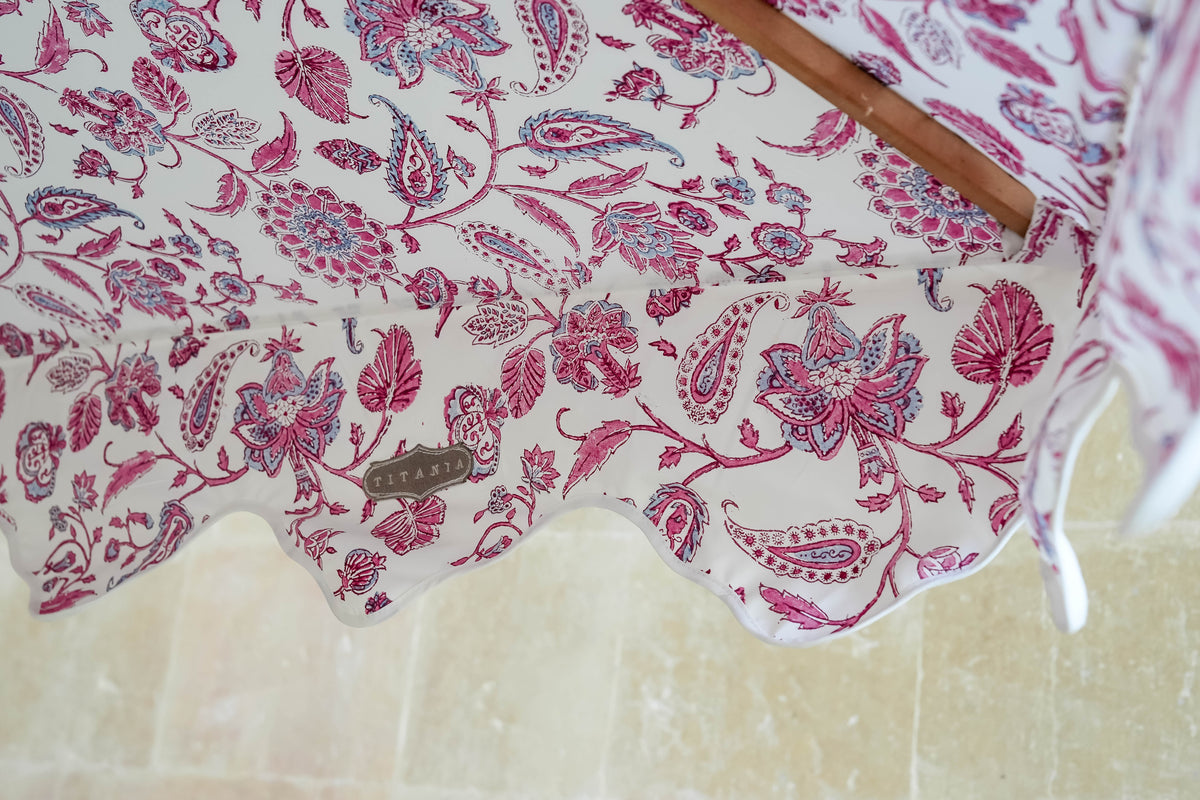
Hand block printing has roots going back centuries in a handful of towns in Rajasthan, places like Bagru and Sanganer, which are still two of the biggest centres for it today. A design starts as a drawing on paper. Carvers cut it into wooden blocks, often one block per colour, and printers stamp it onto cloth by hand, lining each press up purely by eye.
At Titania, this is done through our long-standing partners at INKA in India. It's a relationship built over years, which means the people carving the blocks and mixing the dyes are known to us by name, not some anonymous factory line we've never spoken to.
Once you know that, a napkin stops looking like "a pattern" and starts looking like the work of four or five different craftspeople, each one responsible for a single step.
Match the Print to the Occasion
Because so many prints are hand block printed with traditional Indian motifs, florals, paisleys, and geometric borders, you get a lot of range depending on how you use them.
Simple, understated prints suit everyday meals. Bold, intricate ones make even a plain weeknight dinner feel like more of an occasion. Our honest advice: keep two sets on hand, one quiet, one loud, and you're covered either way.
How to Spot Genuine Hand Block Print
A lot of "block print" napkins sold online aren't block printed at all. They're machine printed with a pattern designed to look handmade. Here's how to tell the difference before you buy, or once it arrives.
Check the back of the fabric. On a genuine hand-block print, the colour usually shows through faintly on the reverse side, since the dye is pressed into the weave rather than sitting on top. Machine print tends to sit only on the front, sharp and flat, with almost nothing visible on the back.
Look for tiny inconsistencies. A repeating motif that's pixel-perfectly identical every single time is a strong sign of machine printing. A genuine hand-block print will have small, natural variations, a slightly off registration here, and a touch more ink there. That's not a flaw. It's the fingerprint of a person doing the pressing.
Pair With Natural Materials
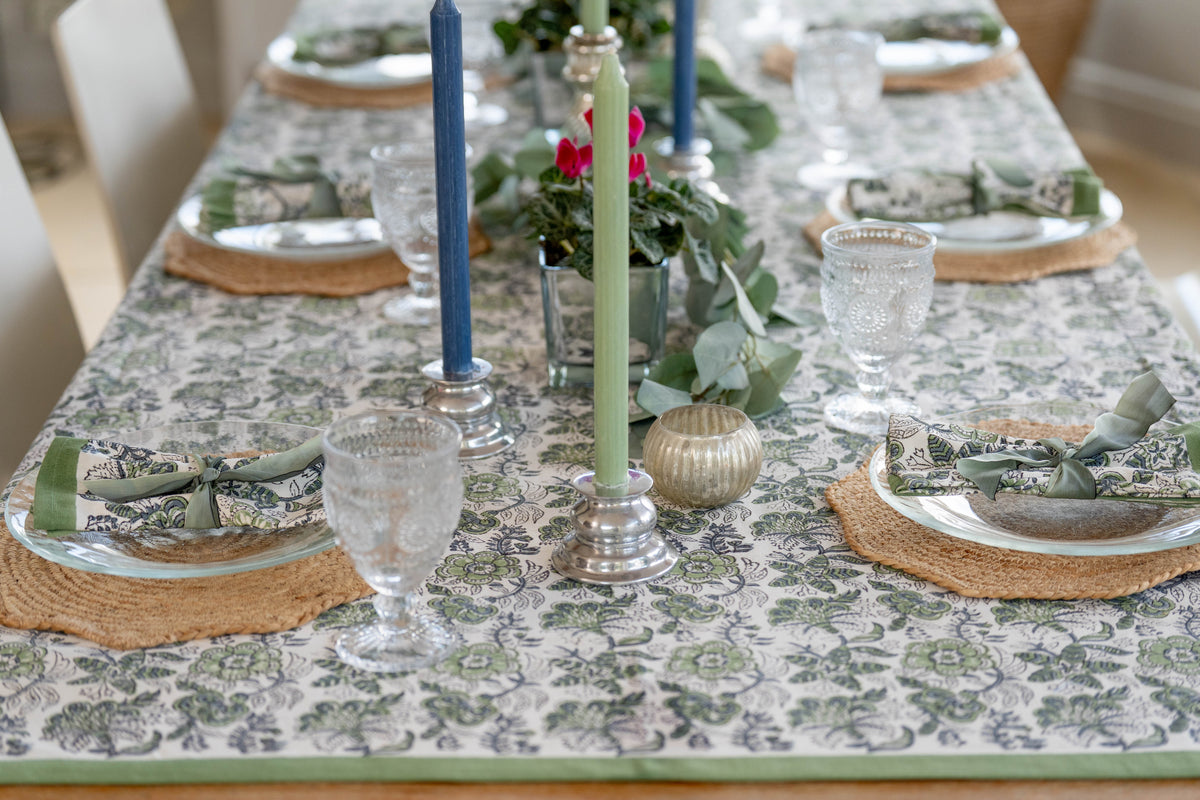
Artisan napkins look best next to other natural, textured things. Wooden chargers, stoneware, brass cutlery, and linen runners. If you're building the full look, our artisan tablecloth and napkin sets are made to be paired together for exactly this reason. You're going for a table that feels earthy and put together, not polished within an inch of its life.
One tip that's easy to get wrong: Don't pair a bold block-print napkin with heavily patterned plates or linens. Let the napkin be the loud one. Keep everything else around it simple so the print has somewhere to breathe.
Napkin Rings: Less Is More
A napkin ring can make a fold look finished, or it can drown it completely. A bold napkin, a simple ring, a thin brass band or plain wood does the job. Save the decorative rings for plainer napkins that need a bit more going on.
Beyond the Dinner Table
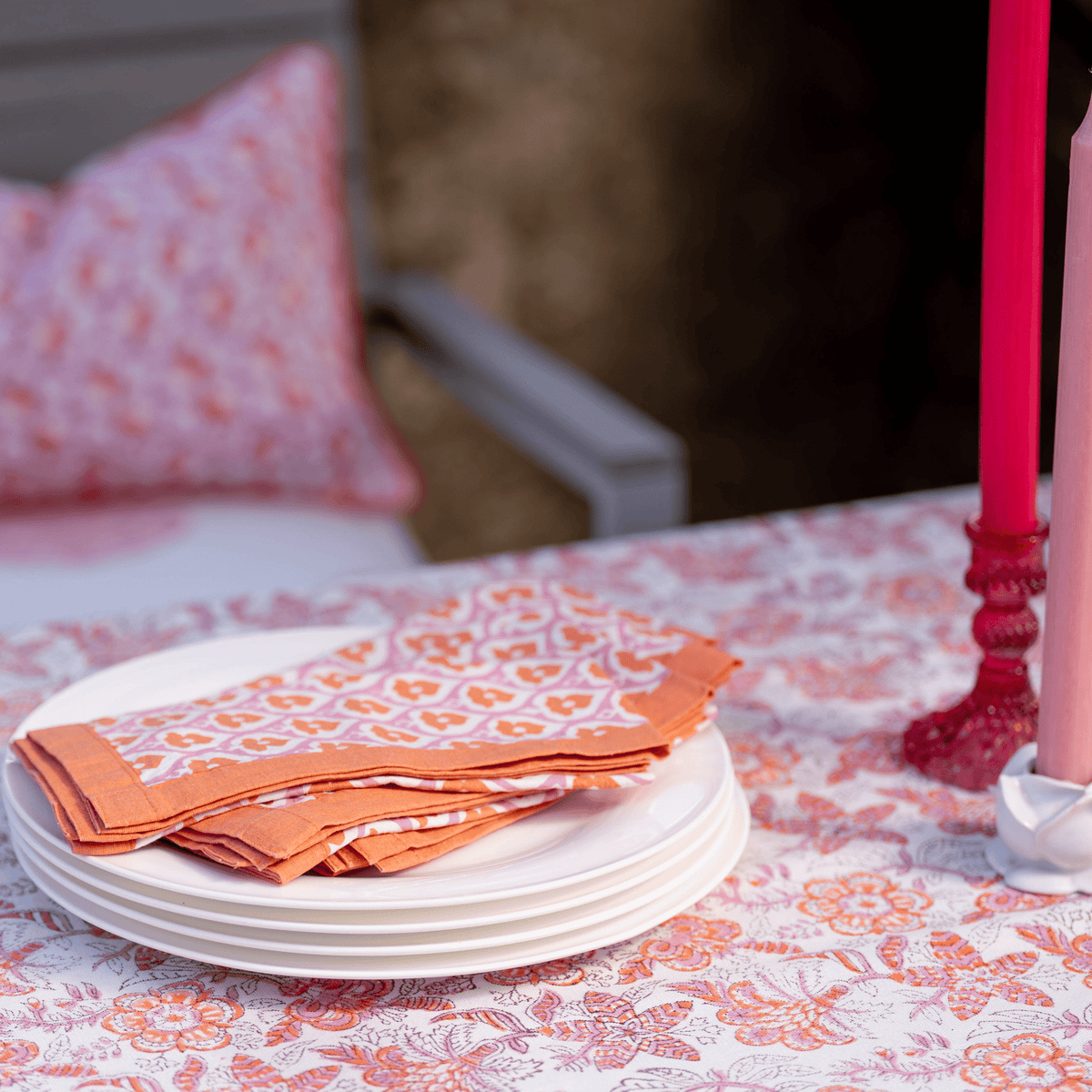
Block printed napkins aren't just for formal dinners: use as a lining for a bread basket for texture and colour or enjoy a small daily lift for an ordinary breakfast. But they really come into their own for outdoor entertaining, for those lingering lunches over a garden table.
Questions We Get Asked a Lot
How do you wash hand-block-printed cotton napkins? Wash on a cool or gentle cycle and avoid harsh detergents, since natural dyes fade faster in hot water. Line dry where you can. Iron on the reverse side if the print's still a bit stiff, which protects the surface pattern.
What's the difference between hand block printing and machine printing?
Hand block printing involves hand-pressing a block onto cloth, applying one colour at a time, and letting the ink fall into the cloth's weave, which means that no two pieces are interchangeable. Machine print gets rolled on in one roll and often will lie flat on top of the fabric, which is why it will fade or crack sooner.
Are cotton napkins better than paper for everyday use? For anything beyond a quick snack, yes. Cotton absorbs better, looks better, and works out cheaper over time since you're not buying a fresh pack every week.
A Small Detail Worth Getting Right
Styling a table with block printed cotton napkins isn't complicated, and it's really one of the simplest table styling ideas worth trying before a dinner party. Good cotton, a print that suits the occasion, a simple fold, natural materials around it. That's really the whole formula. It's a small change, but it's the kind that makes a table feel like someone actually thought about it.
Every napkin is handmade, so your table ends up with a bit more character than the one next door.